
Traffic-sign detection
I trained a traffic-sign detection system for my Pioneer Academics project, with Professor Susan Fox at Macalester College as my mentor. We met biweekly to discuss the work. I selected the datasets, set up the comparisons and wrote the paper, receiving an A+ in the program. This project was more of a learning experience for me than a major research contribution.
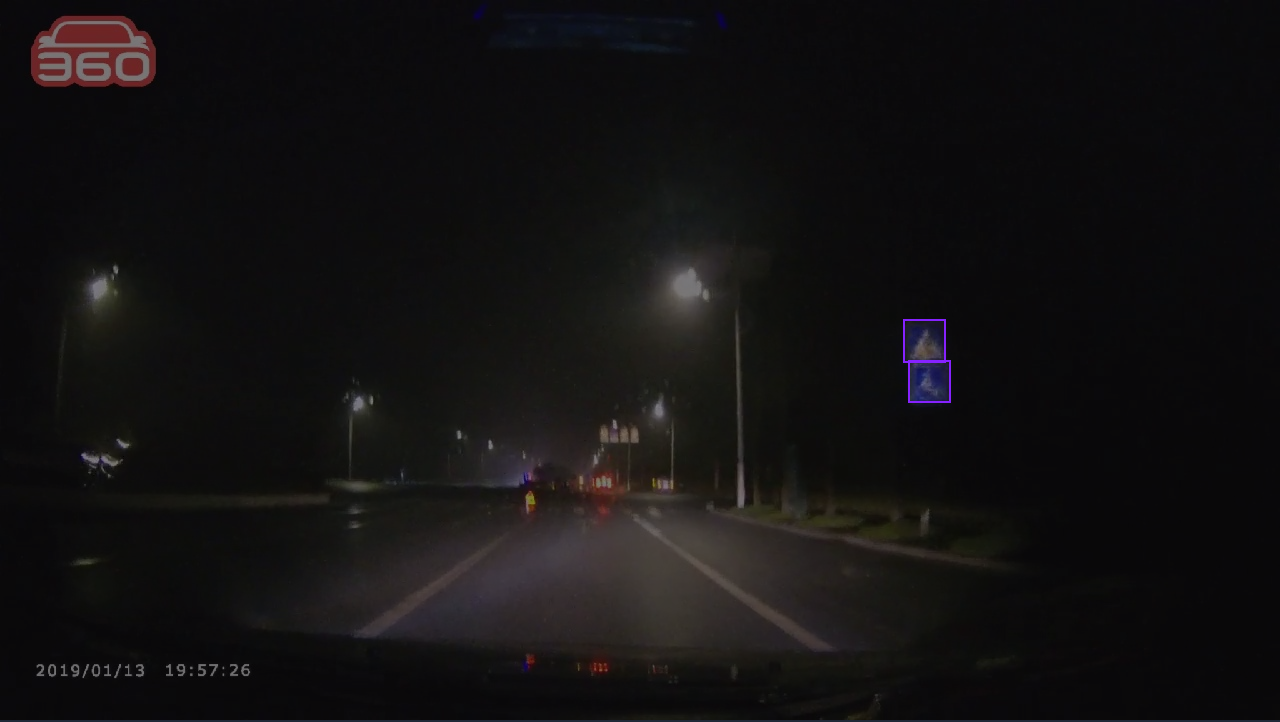
I used YOLOv8s for both sides of the comparison. The single-model baselines were trained on day and night images together; in the modular system, each detector was trained on only one of those conditions. I trained a YOLOv8m-cls scene classifier on BDD100K to identify day or night and select the corresponding detector. That detector then predicts the classes and bounding boxes of the traffic signs. Only one detector runs for an image.
The detectors were trained using the Chinese Traffic Sign Detection Benchmark (CCTSDB). This part needed both the class and bounding box of each sign, as well as a way to separate the day and night images. There were plenty of traffic-sign images available, but fewer with the lighting or weather labels I needed for the comparison. Day and night gave me enough examples; the rain and fog extensions in the paper remained proposals.
I used a shared test set of 75 daytime and 75 nighttime images for all the models. As well as the single YOLOv8s baselines trained on mixed images, I tested the specialists using known lighting labels. That meant they could be compared with the same detectors selected by the classifier. The classifier identified day or night correctly in 95.33% of cases, but this only measures the routing decision. Detecting and locating the traffic signs is the next task.
For detection, the paper reports mAP@0.5 increasing slightly from 90.10% for the best single-model baseline to 90.84% with classifier routing. I treat this as preliminary because the saved evaluation code needs correction.
I shared my project and paper with other students for peer feedback. At Pioneer, I struggled with finding interesting and novel research questions. I still struggle with that, but Pioneer got me interested in a more diverse set of disciplines in computer science. The paper and repository are linked below, including the training notebooks, evaluation code and model weights. I did not measure the latency or hardware cost of running the system in a vehicle.