
StellarXplorers
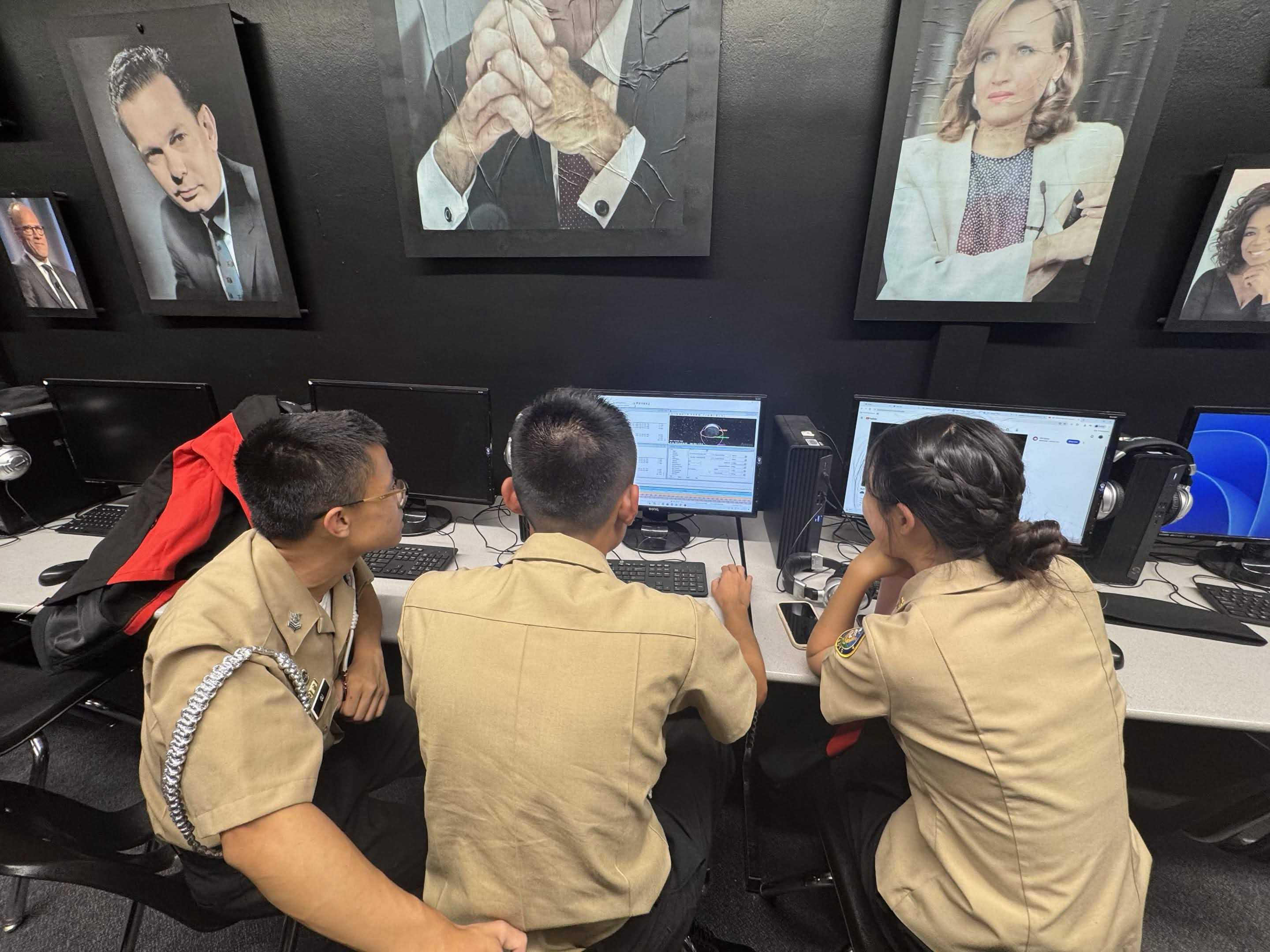
I am the program lead and instructor for Troy High School's StellarXplorers program. I lead a six-member team in the space mission-design competition, where we have reached the national semifinals. I run our twice-weekly practices, handle logistics and communicate with the NJROTC instructors. The technical work includes modeling spacecraft and orbits in Systems Tool Kit (STK) and using Google Sheets to study the tradeoffs between satellite components.
My teammates and I compare orbital configurations in STK. Changing the orbit's size or orientation affects which parts of the ground a satellite can observe and when. We use coverage and sensor-access reports to examine those observation opportunities, and revisit time to measure the gaps between them. We also have fuel requirements and the rest of the mission constraints to consider. These comparisons help us choose a configuration, since a better result for one measure doesn't mean that the design meets all the requirements. I work on the simulations and use Google Sheets for the component trade studies.
Senior members taught me the basics of this work when I joined the team, and I took over as program lead after they graduated. I now teach orbital mechanics and satellite mission design during practices. In the process of teaching, I found that I can reinforce my knowledge significantly because I have to explain concepts clearly enough for everyone to understand.
Here are two examples of lessons I made for the team. The first covers Kepler's laws and the orbital elements used to describe a satellite's orbit. In the second, I demonstrate how to set up a satellite in STK, enter its orbit, check access and read the reports.